What's Included in a Professional Hotel Housekeeping Service?
For hotel owners, boutique property managers, and B&B operators, understanding exactly what a professional hotel housekeeping service involves is essential to making informed decisions about how cleaning and room preparation are structured within their property. Housekeeping is not a single task but a collection of interlinked processes, each with its own standards, scheduling requirements, and operational considerations.
This guide breaks down the full scope of a professional hotel housekeeping service, covering everything from daily room preparation and linen management to deep cleaning cycles, bathroom sanitisation, and compliance frameworks. Whether you manage a small guesthouse or a multi-room hotel, this overview will help you understand what good housekeeping looks like in practice and what to expect from a specialist provider.
Why the Scope of Hotel Housekeeping Matters
Housekeeping is consistently ranked among the top factors that influence guest reviews and repeat bookings. Yet many property operators underestimate how broad the function is. A professional hotel housekeeping service is not simply about surface cleanliness. It encompasses scheduling, stock management, maintenance liaison, compliance documentation, and quality assurance, all of which need to work together to deliver a reliable guest experience.
Understanding this full scope helps property managers set appropriate expectations, allocate resources more effectively, and identify where specialist support may add the most value. Hotel housekeeping services UK have evolved considerably over recent years, with growing emphasis on hygiene standards, environmental responsibility, and measurable quality outcomes.
Daily Room Servicing: The Foundation of Hotel Housekeeping
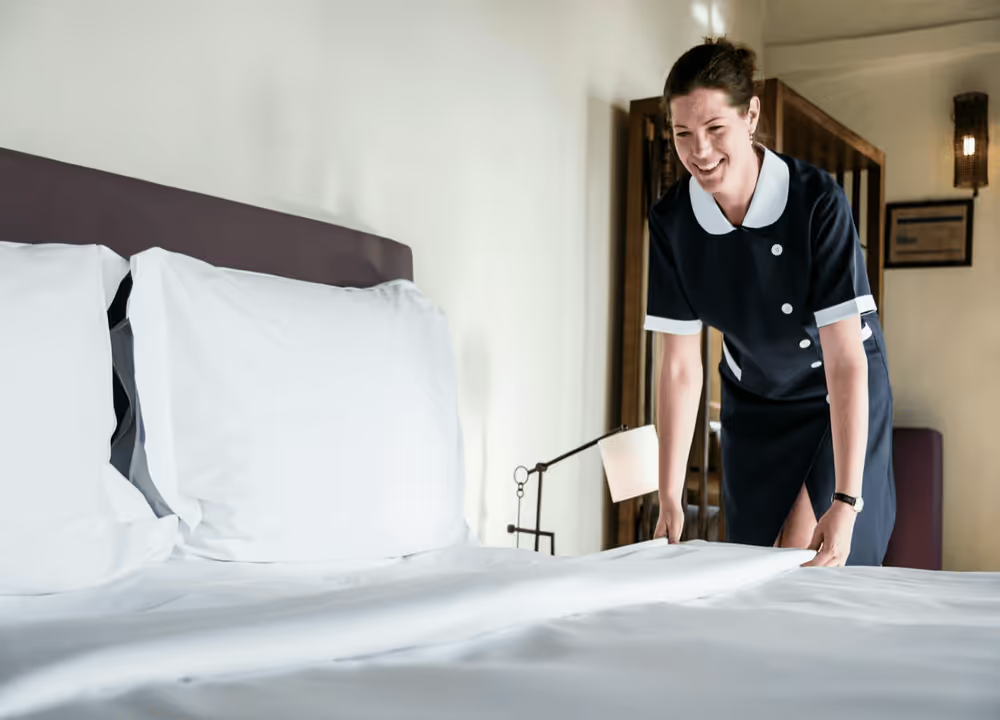
At the heart of any professional hotel housekeeping service is daily room servicing. This refers to the routine cleaning and preparation of guest rooms that takes place throughout the day, both between checkouts and as a service for in-stay guests.
Daily room servicing typically follows a structured sequence that ensures nothing is missed regardless of how busy the property is. This sequence usually includes:
- Removing used linen and replacing it with fresh, laundered items
- Vacuuming carpets and mopping hard floor surfaces
- Wiping down all hard surfaces including furniture, skirting boards, and windowsills
- Cleaning mirrors and glass surfaces
- Emptying waste bins and replacing bin liners
- Checking and restocking all guest amenities including toiletries, tea and coffee supplies, and stationery
- Reporting any visible damage, maintenance issues, or unusual odours to the relevant team
The efficiency and accuracy of daily room servicing directly affects room turnaround times, which in turn affects check-in readiness and front-of-house operations. A well-managed daily room servicing schedule reduces delays, prevents guest complaints, and creates a predictable workflow for housekeeping teams.
For properties with high occupancy, daily room servicing schedules are often zone-based, with operatives assigned to specific floors or wings to minimise travel time and maximise productivity without compromising on the standard of each clean.
Deep Cleaning Hotel Rooms: What It Involves and Why It Matters
While daily servicing keeps rooms presentable between stays, deep cleaning hotel rooms is what maintains the underlying hygiene and condition of the space over time. Deep cleaning goes beyond surface-level tasks and addresses areas that are not covered in routine daily cleans.
Deep cleaning hotel rooms typically covers:
- Cleaning behind and underneath furniture including beds, wardrobes, and bedside tables
- Descaling bathroom fixtures, showerheads, and taps
- Shampooing or steam-cleaning carpets and upholstered furniture
- Cleaning air conditioning units, extractor fans, and ventilation grilles
- Washing curtains, blinds, and soft furnishings
- Cleaning light fittings, ceiling corners, and high-level surfaces
- Inspecting and cleaning inside drawers, wardrobes, and storage spaces
- Checking mattress condition and rotating or replacing as needed
The frequency of deep cleaning hotel rooms varies by property type and occupancy level, but most UK hotel operators schedule a full deep clean for each room every four to six weeks. Properties with higher turnover or specific compliance requirements may schedule these more frequently.
Deep cleaning is also typically carried out as part of end-of-season preparation for seasonal properties, before major refurbishments, or following extended guest stays where additional wear is expected.
Linen Management Services: More Than Just Changing Sheets
Linen management services form a significant and often underappreciated component of a professional hotel housekeeping service. Linen encompasses not just bed sheets and pillowcases but also duvet covers, mattress protectors, towels, bathmats, robes, and in some properties, table linen for dining areas.
Effective linen management services involve:
- Collecting used linen from rooms and logging quantities accurately
- Sorting and bagging linen for laundry, separating different item types
- Liaising with on-site or off-site laundry facilities to manage turnaround times
- Inspecting returned linen for staining, damage, or deterioration before return to service
- Managing linen par levels to ensure sufficient stock is always available across the property
- Retiring damaged or worn linen from circulation and flagging for replacement
Linen condition has a direct impact on guest perception. Yellowed towels, mismatched bedding, or linen with visible wear are among the most cited complaints in hotel reviews. A structured linen management services programme reduces these incidents by introducing clear stock control, regular quality checks, and timely replacement cycles.
For properties working with a specialist hospitality cleaning provider, linen management services are often integrated into the broader housekeeping contract, simplifying administration and ensuring consistency across the property.
Bathroom Sanitisation in Hotels: Standards and Procedures
Bathroom sanitisation hotels is one of the most scrutinised aspects of any professional hotel housekeeping service. Guests pay close attention to bathroom cleanliness, and shortcomings in this area generate some of the most negative feedback a property can receive.
Effective bathroom sanitisation hotels procedures go well beyond a quick wipe-down. A thorough bathroom clean as part of a professional housekeeping service includes:
- Scrubbing and disinfecting the toilet bowl, seat, lid, and external surfaces
- Cleaning and sanitising the sink, including taps, overflow outlet, and surrounding surfaces
- Scrubbing the shower or bath, including grout lines, drainage areas, and glass screens
- Descaling chrome fixtures and polishing surfaces to remove water marks
- Cleaning mirrors, shelf surfaces, and wall tiles
- Replacing all guest toiletries, wrapped soap, and hygiene products
- Replacing towels, bathmats, and any other soft furnishings
- Mopping or wiping the bathroom floor, including behind the door and around the base of the toilet
- Restocking toilet roll and any other consumables
In addition to the physical clean, bathroom sanitisation in hotels requires the use of appropriate products. This means using disinfectants with proven efficacy against common pathogens while also considering the surface compatibility of cleaning agents to avoid damage to fixtures and fittings over time.
The Role of ISO Standards in Sustainable Cleaning
ISO and sustainable cleaning go hand in hand, as ISO standards provide a structured framework for maintaining high-quality cleaning services while supporting environmentally responsible practices. In sustainable cleaning, ISO helps businesses focus on using eco-friendly products, reducing waste, improving resource efficiency, and ensuring health and safety standards are met. Together, ISO and sustainable cleaning reflect a commitment to cleaner environments, better operational practices, and long-term sustainability.
Housekeeping Checklists: The Operational Backbone of Quality
Housekeeping checklists are the primary tool through which a professional hotel housekeeping service maintains consistency and accountability. Without a structured checklist system, standards become dependent on individual operatives and are difficult to monitor or verify.
A well-designed housekeeping checklist covers every task required in each room or area, presented in the order in which tasks should be completed. This sequential approach reduces the risk of missed steps and supports training for new team members.
Housekeeping checklists are typically divided by area, for example a separate checklist for guest bedrooms, bathrooms, corridors, and public areas. They may also vary by service type, with different checklists used for checkout cleans, daily in-stay services, and deep cleaning cycles.
Beyond guiding operatives during the clean itself, housekeeping checklists serve several important functions:
- They provide a record of which tasks were completed, by whom, and at what time
- They support supervisor inspections by providing a reference point for what should have been done
- They help identify patterns in missed tasks or recurring quality issues
- They form part of the documentation required for hotel hygiene compliance audits
Many specialist providers use digital checklist systems that allow real-time completion tracking, supervisor sign-off, and reporting across multiple properties or departments.
Hotel Cleaning Schedules: Planning Around Occupancy
Hotel cleaning schedules determine when and how cleaning activity is distributed across a property. Effective scheduling is essential to ensuring that rooms are ready when guests need them, that public areas are maintained throughout the day, and that deep cleaning cycles are completed without disrupting operations.
A professional hotel housekeeping service will develop hotel cleaning schedules that consider:
- Anticipated occupancy levels and check-in or check-out patterns
- The number of rooms requiring a full checkout clean versus a daily in-stay service
- Public area cleaning requirements at different times of day
- Deep cleaning rotation across the room inventory
- Special requirements such as event setup, VIP arrivals, or accessible room preparation
Effective hotel cleaning schedules are rarely static. They need to flex in response to same-day changes in occupancy, late checkouts, early arrivals, and maintenance requirements. A housekeeping team working to a rigid schedule that cannot adapt to real-time changes will struggle to keep pace with the demands of a live hotel environment.
Minibar Replenishment Service: A Detail That Matters
Minibar replenishment service is a housekeeping function that is easy to overlook but has a clear impact on guest satisfaction and ancillary revenue. An empty or partially stocked minibar noticed by a guest on arrival creates a poor first impression and may result in a lost sale.
A minibar replenishment service within a professional housekeeping programme involves:
- Checking minibar stock levels during or after each room service
- Recording items consumed by the departing guest for billing purposes
- Restocking from a central supply store according to the standard minibar configuration
- Checking product expiry dates and rotating stock accordingly
- Reporting any damage to minibar units or issues with cooling performance
Where properties use automated minibar systems, housekeeping staff are responsible for verifying that the technology is functioning correctly and flagging any discrepancies between recorded consumption and physical stock levels.
Hospitality Cleaning Procedures: Consistency Across Every Area
Hospitality cleaning procedures define not just what is cleaned but how it is cleaned. This includes the products used, the equipment deployed, the order in which tasks are carried out, and the standards against which the finished clean is assessed.
Standardised hospitality cleaning procedures are important because they:
- Reduce variation between individual operatives and shifts
- Ensure that cleaning products are used correctly and safely
- Support training and induction for new team members
- Provide a basis for quality audits and performance reviews
- Help demonstrate compliance with health and safety requirements
A professional hotel housekeeping service will have documented hospitality cleaning procedures for every area of the property, updated regularly to reflect changes in products, equipment, or regulatory guidance.
Hotel Maintenance Support: Where Housekeeping and Maintenance Connect
A professional hotel housekeeping service does not exist in isolation from the broader operational infrastructure of the property. One of the most important interfaces is with hotel maintenance support, as housekeeping operatives are often the first to identify physical defects, equipment failures, or safety concerns during their work.
Effective hotel maintenance support integration within a housekeeping programme includes:
- A clear process for reporting maintenance issues identified during room cleans
- Defined response time expectations for different categories of defect
- A communication channel between housekeeping supervisors and maintenance teams
- A logging system that tracks reported issues through to resolution
Working with a property maintenance company alongside a specialist housekeeping provider can simplify this coordination. When both functions are managed by providers with an established working relationship, the communication between them is typically faster and more reliable than when two entirely separate contractors are involved.
Pricing Overview
When it comes to hotel housekeeping, cost efficiency is a major factor for operators. On average, the cost of cleaning a hotel room can reach around £18 per room when all expenses are accounted for across the year.
However, by leveraging scale and outsourcing to experienced providers like Godfrey Group, these costs can be significantly reduced. In fact, housekeeping services can be delivered from as low as £18 per room, depending on volume and operational requirements.
This highlights a key advantage of outsourcing: the more rooms serviced, the greater the cost savings. Pricing is therefore flexible and typically tailored based on the size of the property and the volume of work involved.
Conclusion
A professional hotel housekeeping service is one of the most operationally complex functions in any hospitality property. From daily room servicing and bathroom sanitisation to linen management, deep cleaning, and maintenance liaison, each element requires careful planning, trained operatives, and robust quality assurance systems to deliver consistent results.
For hotel owners and boutique property operators looking to raise standards, reduce operational complexity, or ensure that their housekeeping programme meets current hotel housekeeping services UK expectations, understanding this full scope is the essential first step. If you are looking for reliable and professional support, contact us today to learn how our tailored hotel housekeeping services can help improve efficiency, maintain high hygiene standards, and enhance your guests’ overall experience.
Frequently Asked Questions
What does a professional hotel housekeeping service include?
It covers daily room servicing, bathroom sanitisation, linen changes, minibar restocking, deep cleaning, public area cleaning, and maintenance reporting across the full property.
How often should deep cleaning hotel rooms be scheduled?
Most UK hotels deep clean each room every 4 to 6 weeks. High-occupancy properties or those with strict hygiene compliance requirements may schedule deep cleans more frequently.
What are housekeeping checklists used for in hotels?
Housekeeping checklists guide operatives through each task in sequence, support supervisor inspections, provide compliance records, and help identify recurring quality issues across the property.
Why is linen management services important in hotels?
Linen condition directly affects guest satisfaction. Structured linen management services ensure stock levels, quality, and hygiene standards are maintained, reducing complaints and replacement costs.
Can ecofriendly cleaning solutions meet hotel hygiene standards?
Yes. Many UK-approved eco-friendly cleaning solutions carry commercial hygiene certifications and meet all required disinfection standards without compromising on environmental credentials.
Searching for reliable cleaning solutions?
Speak to one of our experienced team in Welsh or English today.
More news & insights
Stay up-to-date with the latest company news and industry insights from Godfrey Group.



Delivering excellence in commercial cleaning & housekeeping solutions
At Godfrey Group Facilities, we strive to create clean, safe, and well-maintained environments for all, while fostering a supportive and inclusive workplace for our employees.
Our commitment to efficiency, reliability, and professionalism ensures that every service we deliver meets the highest standards.
Led by our managing director Andrew Godfrey, our trusted, hand picked, dedicated team, are here to help you.